Stefan Krause's business is a thousand small promises: the kiosk gets Cola by Thursday, the hotel gets its juice lot with the freshest best-before, the café pays on net-14 and somebody has to remember that. Eight hundred SKUs, three price tiers, and a warehouse where every step a forklift doesn't take is money.
Golden Inventory arrived as the wholesale mode — and the app reshaped itself around the day: Orders, not "sales orders"; Accounts, not "customers"; the POS demoted out of the main menu; the warehouse floor — Fulfillment, Picking, Put-away — given its own place in the nav.
07:30 — the phones ring
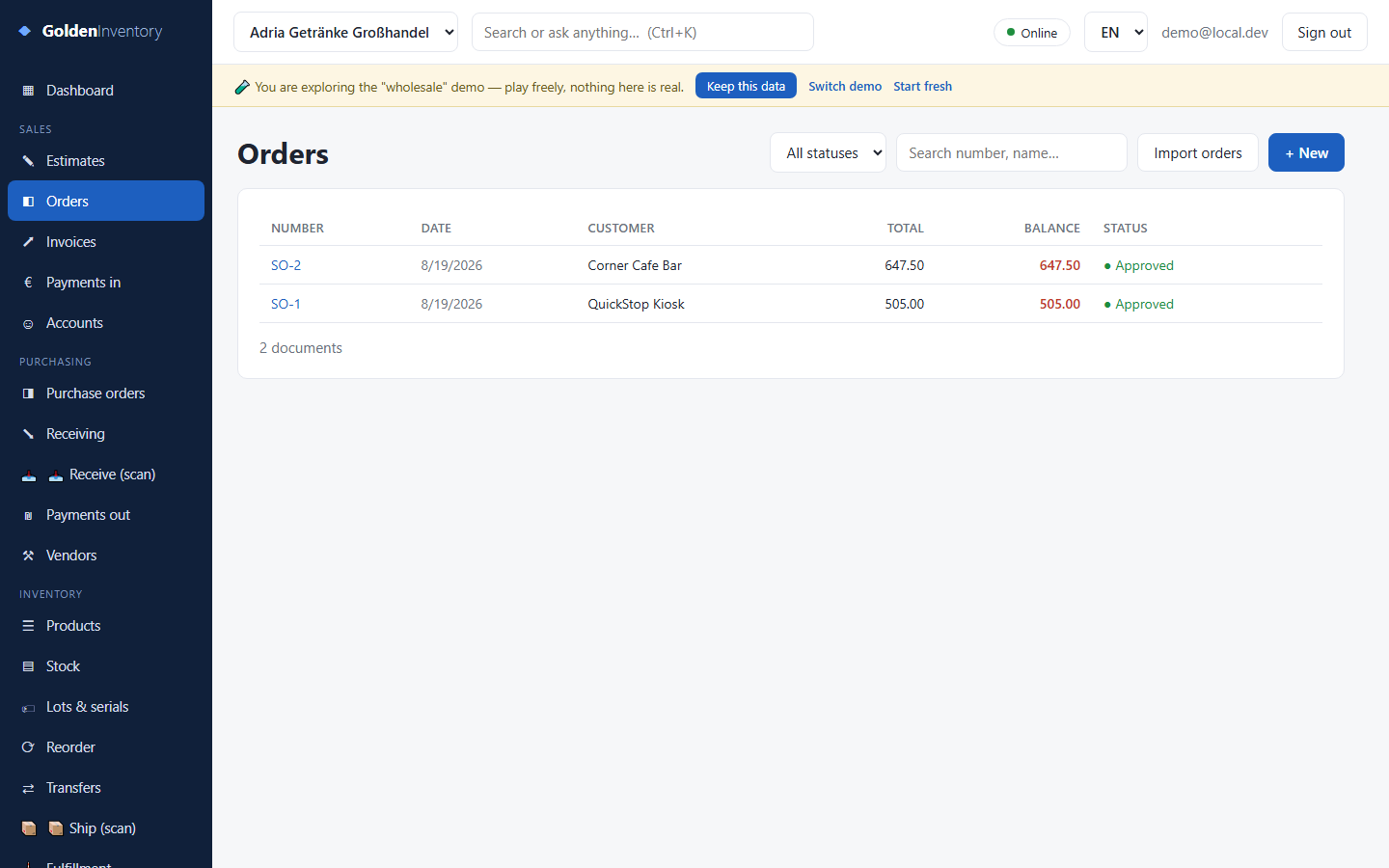
Twelve orders before coffee. The kiosk pays list, the café gets trade terms, the hotel's volume contract is its own level — each order auto-prices from the account's tier, and the negotiated pallet deal is a per-line override. When an order asks for sixty crates and forty are on the shelf, the line shows a backorder chip and still saves: the sale is a fact, availability is a plan.
11:00 — the allocation engine
The manager opens the approved order and presses Plan. The engine enumerates every warehouse combination, scores it against stock minus active reservations, and shows the winner, the runner-up it beat, and a reason per line. Apply places the hard reservations — nothing is held a second before that press — and queues the pick: one task, lines sorted into the walk order the forklift actually drives.
13:00 — the walk
One operator, one cart, one pass A to D. Every confirmation scans the item and verifies the face — the neighbouring shelf is exactly the mistake it catches. Two juice lots sit in the same face; FEFO offers the older best-before first. Eighteen crates on the shelf against twenty-four on the list? A short pick is a fact, not an error — it is recorded the moment it happens, and the control tower re-plans the difference for the afternoon route. And when the cold room kills the Wi-Fi mid-walk, claim, confirm and complete keep working from the device and drain from the outbox the moment the operator is back in range.
14:00 — the rest of the day
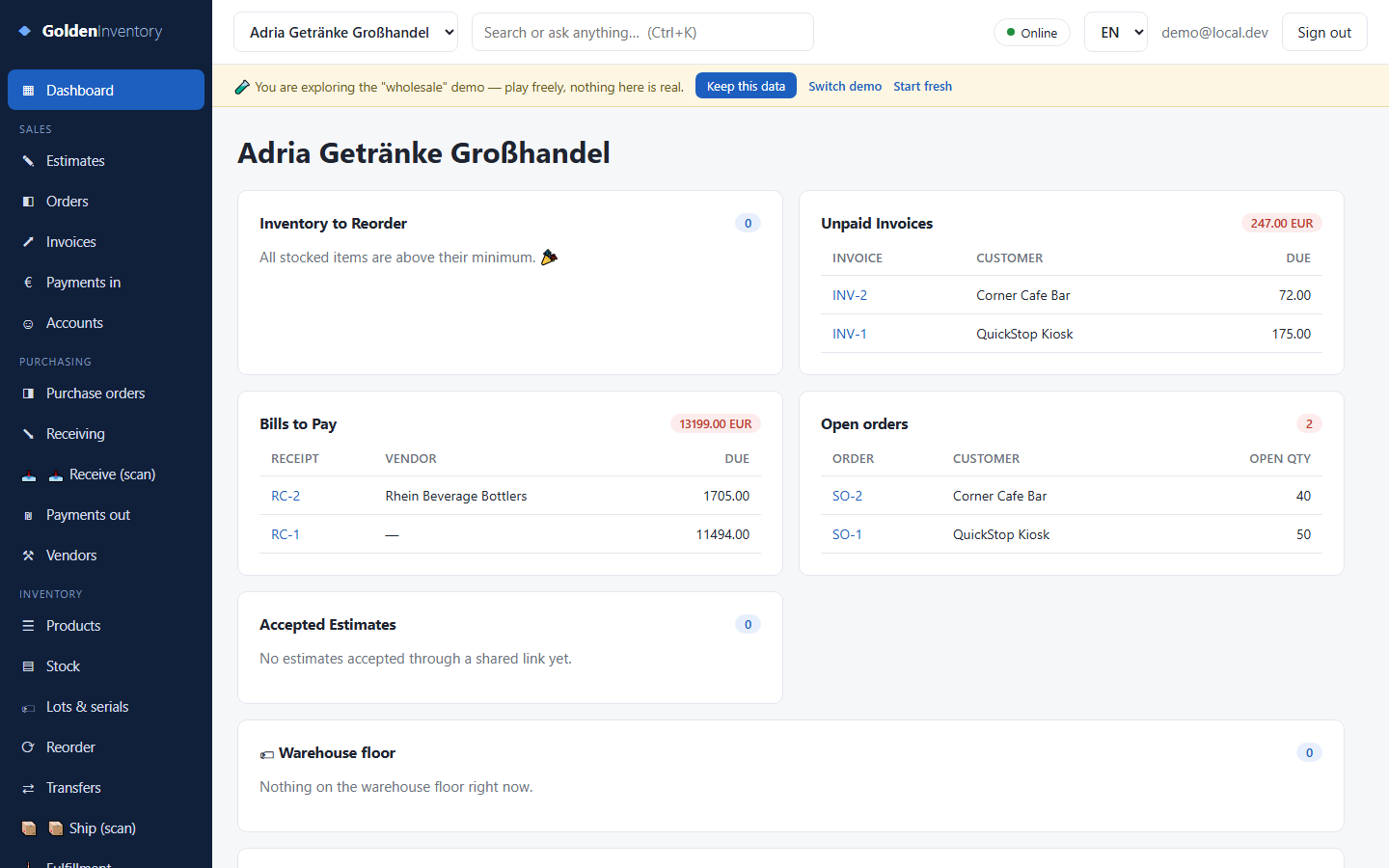
Fifteen pallets transfer to the cross-dock for tomorrow's north route. Aisles are cycle-counted while they are quiet, the variance posting against live stock, not a snapshot. The receivables screen runs statements for the three overdue accounts and applies two incoming bank payments across five invoices — each invoice's balance moves where it should. And the reorder screen turns tomorrow's par levels into one draft purchase order per supplier, closing the loop back to the dock.
17:00 — margin by customer group, books by month end
The report builder answers the question that actually pays rent: what margin did each customer group make this month? Expiring juice gets its own list before it becomes waste, stock rolls up by leaf path to the warehouse, and at month end the DATEV export hands the tax adviser clean numbers — landed costs already folded into item cost, no spreadsheet archaeology.
One warehouse and an order desk? Read inventory software for a small wholesaler.