A workshop's real filing system is the windscreen. A key with a paper tag, a scribbled plate, a mechanic who remembers that the silver Passat needs the other brake pads. It works until the day two identical taxis are in at once — and then it costs a morning.
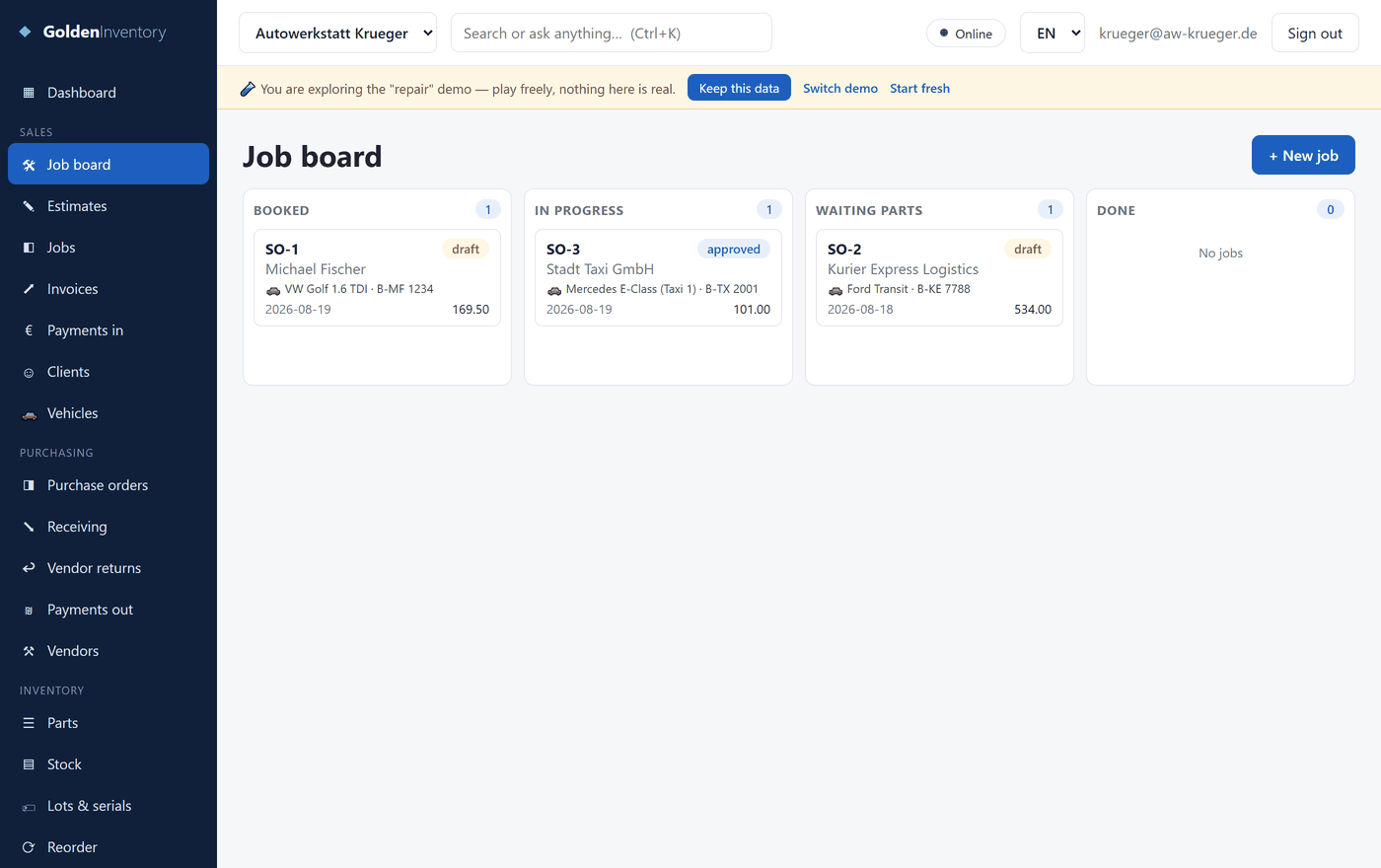
Golden Inventory arrives at Krüger as the repair mode: items are called Parts, customers are Clients, sales orders are Jobs, and the app opens on the Job board instead of a dashboard. Nothing was configured by hand — picking the workshop profile did it.
07:30 — the Passat comes in
The customer drops the car off on his way to work. The office picks the client, picks his vehicle from the asset list, and types the odometer: 128 650 km. That reading is not a note — it lands on the document, and when the job is approved it becomes the car's current mileage everywhere in the system. Service intervals count from it.
08:10 — the estimate goes to his phone
Brake pads, a disc pair, two and a half hours of labour on Mechanic 1, and a set of wipers while the car is up. The estimate is shared as a link. He opens it on the tram and does what customers actually do: accepts the brakes, declines the wipers.
The accepted lines — and only those — become a job. The declined wiper line stays on the estimate, marked declined, so nobody re-quotes it by accident and the shop can see what customers say no to.
09:00 — the part that isn't in the drawer
The Transit in bay 2 needs a timing belt kit that nobody stocks. A purchase order goes to the distributor and the job card moves to Waiting parts — one drag, and the whole shop can see why that bay is standing still. When the delivery arrives, the receipt books the parts into the Parts Store and the card moves to In progress.
One of the brake discs in that delivery is warped. It goes back on a vendor return built from the receipt in one click: the stock leaves at the cost it arrived at, and the credit is tracked against the distributor instead of being remembered by whoever unpacked the box.
11:40 — the fleet call
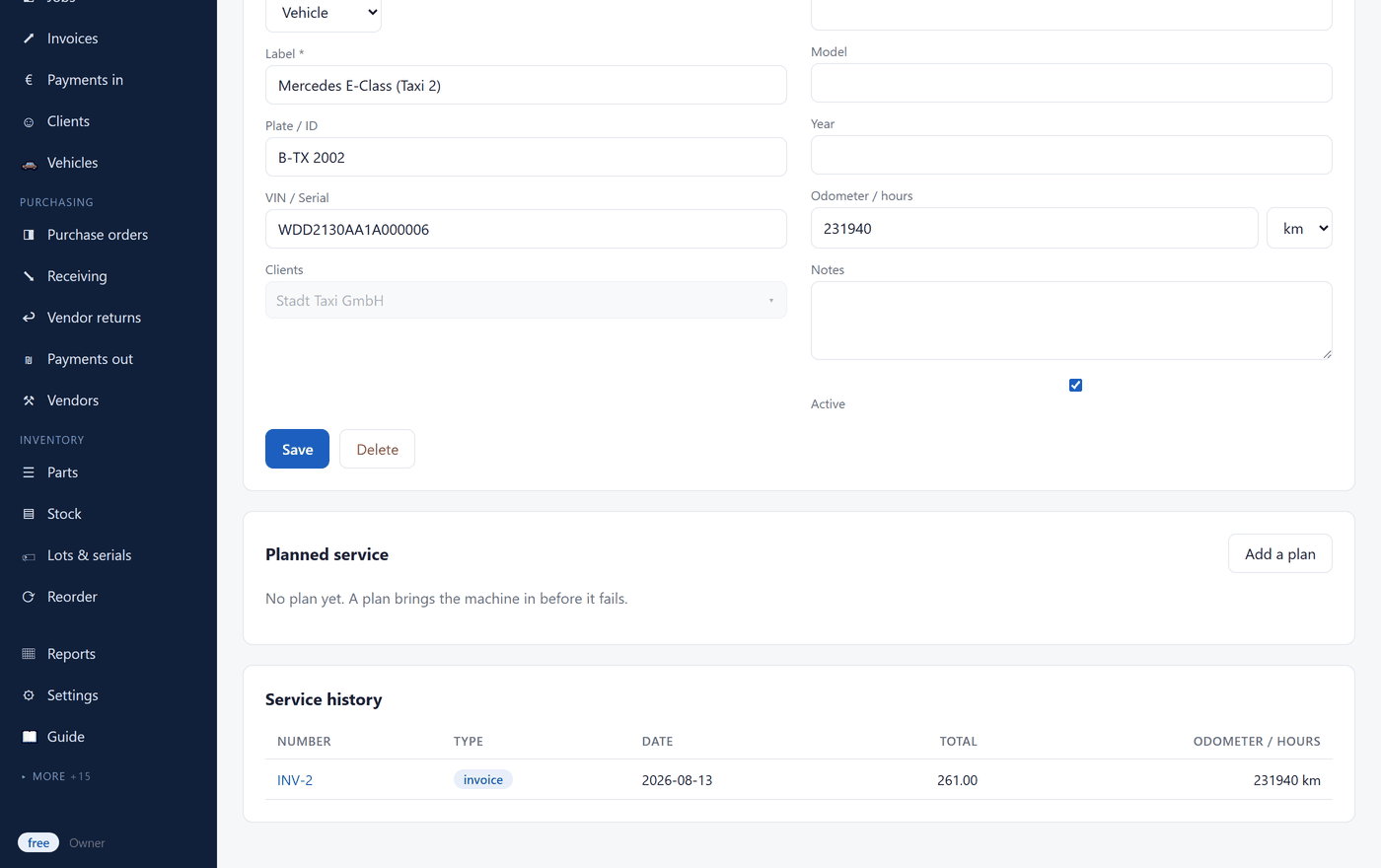
The taxi firm wants to know when their second E-Class last had brakes. The Vehicles screen searches by plate or VIN; the car's page carries every estimate, job and invoice it has ever been on, each with the odometer at the time. Quoting three inspections takes as long as reading the list.
14:20 — hours booked from the pit
The workshop's back wall eats mobile signal. A mechanic adds the extra hour and a half to the open job on his phone anyway; the change sits in an outbox and syncs the moment he walks past the office door. The same is true of dragging a card across the board — the board is usable in the parts of the building where the Wi-Fi isn't.
16:00 — the job becomes an invoice
Finished job, one conversion: the invoice carries the same lines, the same vehicle, and prints the plate, the VIN and the odometer in a block above the parts. A German customer gets a German document with 19% MwSt shown the way the Finanzamt expects it; the fleet gets net-30 and shows up in receivables until it's paid.
18:00 — what the day made
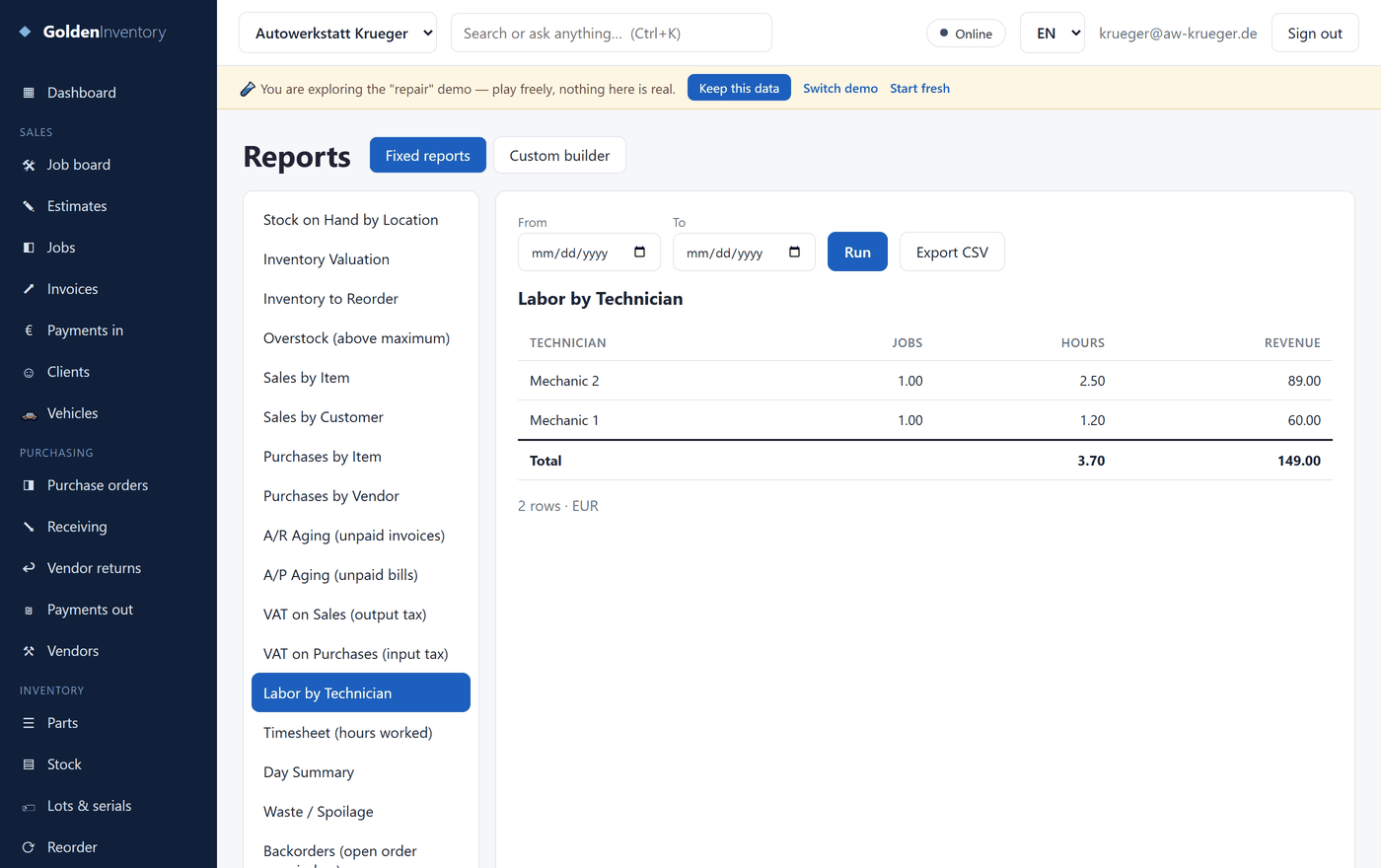
Two reports close the shop. Labor by Technician — hours booked, jobs touched and revenue per mechanic, straight off the labour lines nobody had to re-enter. A/R Aging — who owes what, and for how long.
What actually changed
Nothing about the workshop. The mechanics still work bays, the office still chases the distributor, the customer still says no to the wipers. What changed is that the plate is the filing system: the estimate, the special-order part, the return, the hours, the invoice and the mileage all hang off the car — and the board on the wall is the same board the office is looking at.